
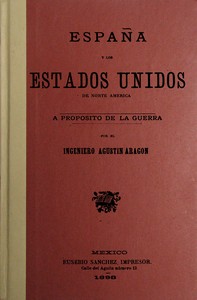
España y los Estados Unidos de Norte América : a propósito de la guerra by Aragón
Published in 1898, right after the Treaty of Paris ended the Spanish-American War, this book is Agustín Aragón's fiery take on a national disaster. Spain had just lost Cuba, Puerto Rico, Guam, and the Philippines. The book is his attempt to diagnose why.
The Story
There isn't a traditional plot with characters. Instead, Aragón builds a case. He walks through the long, troubled history between Spain and its colonies, focusing on Cuba. He argues that years of mismanagement, political corruption, and a failure to grant meaningful reforms created the conditions for rebellion. When the U.S. got involved, Aragón saw it as the final, inevitable blow, not the sole cause. The "story" is his passionate prosecution of Spain's own ruling class. He claims they were asleep at the wheel, more interested in internal squabbles than governing a global empire. The loss, for him, was a self-inflicted wound.
Why You Should Read It
What grabbed me was the sheer emotion. This isn't a detached analysis written a century later. This is a man watching his country's status evaporate overnight, and he's angry and grieving. You feel his urgency. He's not just recounting events; he's trying to shock Spain into waking up and reforming itself before it's too late. His focus on internal causes over external aggression is a powerful and somewhat rare perspective for the time. It’s a brutally honest look in the mirror.
Final Verdict
This is a niche but gripping read. It's perfect for history buffs who want to go beyond textbook summaries and feel the immediate human reaction to a major world event. If you're interested in the decline of empires, national identity crises, or the roots of U.S. imperialism, this primary source is gold. A word of caution: it's a political essay, not a narrative. But if you approach it as a compelling, heartfelt argument from the losing side of history, it’s incredibly revealing. You won't get battle maps, but you'll get the soul-searching that followed the defeat.
This publication is available for unrestricted use. Thank you for supporting open literature.
Logan Taylor
1 year agoPerfect.
Amanda Flores
1 year agoGreat reference material for my coursework.
Lisa Wilson
1 year agoSimply put, the atmosphere created is totally immersive. I learned so much from this.
Ethan Gonzalez
3 months agoFast paced, good book.



Jackson Hernandez
9 months agoGood quality content.