
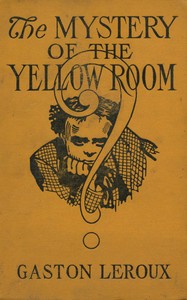
The Mystery of the Yellow Room by Gaston Leroux
Gaston Leroux's The Mystery of the Yellow Room kicks off with one of the most famous setups in detective fiction. At the Château du Glandier, Mathilde Stangerson retires to her study-bedroom, the 'Yellow Room.' Her father and a servant hear her desperate screams and the sound of a struggle. They rush to help, but the door is locked from the inside. By the time they break it down, Mathilde lies battered and unconscious on the floor. The room is a shambles, but the attacker is gone. The window shutters are secured from within, and there's no secret passage. It's a perfect locked room.
The Story
Enter Joseph Rouletabille, an 18-year-old reporter for a Paris newspaper. With brilliant, almost arrogant confidence, he inserts himself into the investigation, often running circles around the official detective, Frédéric Larsan. The plot thickens with a second attack, mysterious footprints, a suspicious caretaker, and a complicated web of relationships and past secrets surrounding the Stangerson family. Rouletabille's method is all about logic and minute observation—he notices details everyone else misses. The story is told by his admiring friend, Sainclair, which lets us follow the young detective's genius while remaining as clueless as the police for most of the journey.
Why You Should Read It
Reading this book is like watching a master magician at work. Leroux plays absolutely fair with the reader; all the clues are there. The joy isn't just in the 'whodunit' but overwhelmingly in the 'howdunit.' How did the criminal get in and out of a sealed room? Rouletabille is a fantastic character—a youthful, energetic brainiac who predates Hercule Poirot's 'little grey cells' by over a decade. The pace is brisk, the central puzzle is genius, and there's a charming, old-fashioned quality to the prose that pulls you right into its world of country châteaus and early forensic science.
Final Verdict
This book is perfect for classic mystery lovers, fans of Agatha Christie and Arthur Conan Doyle who want to go back to one of the genre's foundational texts. It's also a great pick for anyone who loves a pure, logical puzzle. If you enjoy trying to piece together clues before the detective's final, dramatic explanation in the drawing room, you'll adore this. Just be prepared for a solution that is, in true locked-room fashion, brilliantly simple and utterly surprising.
This title is part of the public domain archive. It is available for public use and education.
Kevin Davis
1 year agoThe index links actually work, which is rare!
Dorothy Garcia
3 months agoFinally found time to read this!
Mason Hill
1 year agoThis book was worth my time since the storytelling feels authentic and emotionally grounded. Exactly what I needed.
John Clark
1 year agoRecommended.




David Robinson
5 months agoThanks for the recommendation.