
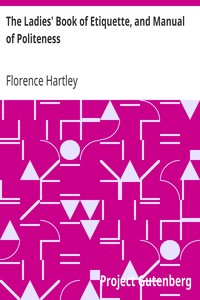
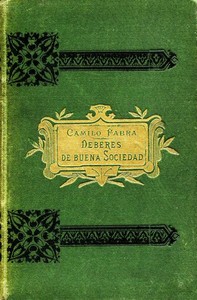
The Ladies' Book of Etiquette, and Manual of Politeness by Florence Hartley
Forget about a plot with a beginning, middle, and end. 'The Ladies' Book of Etiquette' is the plot. Published in 1860, this book is the definitive guide on how to be a respectable woman in Victorian America. Author Florence Hartley lays out, in exhaustive and exacting detail, the blueprint for female perfection. The 'story' it tells is the story of a woman's entire social life, from the cradle to the grave.
The Story
The book is structured as a series of instructions. It starts with a young girl's behavior at home, teaching her deference and modesty. Then, it follows her out into the world. It dictates how to walk, talk, sit, and stand. There are chapters on hosting and attending parties, writing letters (with specific formulas for every rank of person), proper dress for every occasion, and the intricate dance of courtship. It even covers travel, illness, and mourning. The narrative thread is the relentless pursuit of propriety. Every action, from accepting a gentleman's arm to choosing a dinner topic, is a potential pitfall. The stakes? Your family's honor and your own marriage prospects.
Why You Should Read It
This book is a goldmine. On one level, it's incredibly funny. The rules are so specific and often absurd by today's standards (like advising against wearing diamonds before evening). But the humor quickly gives way to something more profound. You start to feel the immense pressure these women were under. This manual shows the rigid cage of expectations that defined femininity. It’s not just about manners; it’s about control, class, and survival. Reading Hartley's earnest advice—like how to quietly manage a drunk guest or endure boring conversation—you gain a deep, visceral understanding of a historical period that no dry textbook could ever provide. The characters are all of us, trying to fit into a world with impossible rules.
Final Verdict
This book is perfect for history lovers, fans of shows like 'Bridgerton' or 'The Gilded Age' who want the real rulebook, and anyone curious about the origins of our modern social customs. It's also a fantastic read for writers looking to add authentic period detail to their work. Approach it not as a dry manual, but as a primary source document that crackles with the anxiety and aspiration of its time. You won't find a plot twist, but you will find a stunningly clear window into the past.
This is a copyright-free edition. Feel free to use it for personal or commercial purposes.




Paul Miller
11 months agoWithout a doubt, the flow of the text seems very fluid. Thanks for sharing this review.