
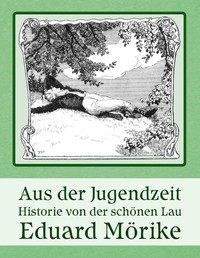
Aus der Jugendzeit; Historie von der schönen Lau by Eduard Mörike
Eduard Mörike's 'Historie von der schönen Lau' is a fairy tale wrapped in a frame story. A group of friends are traveling and stop at the Blautopf spring in Southern Germany. There, one of them tells the local legend of the 'Beautiful Lau,' a water nymph from the Danube.
The Story
The Lau is in a bad spot. She's been banished by her husband, the Donaumännlein (a sort of Danube water-king), because she's given birth to five stillborn children. He blames her deep sadness, decreeing she can only return home after she's laughed out loud five times. So, she's stuck living in the Blautopf spring, watched over by the kind-hearted but simple weaver's wife, Frau Betha. The plot follows the Lau's attempts to experience human life and find something funny enough to break her melancholy. She observes the townsfolk, interacts with Betha's family, and has small, everyday adventures. The humor comes from her innocent misunderstandings of human customs. Her quest for laughter is a slow, gentle process of healing through simple human connection and unexpected moments of silliness.
Why You Should Read It
This isn't a story about slaying dragons. It's about slaying a bad mood. Mörike makes this mythical creature feel incredibly real. Her sadness is palpable, and her gradual awakening to joy is quietly moving. The real magic is in the ordinary setting. The Lau finds potential for laughter in a child's antics, a clumsy moment, or the warm chaos of a family home. It suggests that healing often comes from outside ourselves, from engaging with the simple, messy world. Frau Betha is a fantastic character—practical, superstitious, and endlessly patient. Their friendship, between a mythical being and a down-to-earth woman, is the heart of the book. It’s a beautiful reminder that kindness is a universal language.
Final Verdict
This book is perfect for anyone who loves quiet, character-focused fairy tales or needs a little literary comfort food. If you enjoy the psychological depth of authors like Oscar Wilde in his fairy stories or the folkloric charm of the Brothers Grimm, but prefer something gentler and less grim, you'll find a friend in Mörike. It's also a great, short read for a cozy afternoon. You'll finish it feeling like you've had a warm conversation with a thoughtful friend about sadness, laughter, and the small wonders right in front of us.
This masterpiece is free from copyright limitations. You do not need permission to reproduce this work.
Kevin Williams
1 year agoI started reading out of curiosity and it creates a vivid world that you simply do not want to leave. I learned so much from this.
Daniel Miller
10 months agoComprehensive and well-researched.
Melissa Lewis
2 months agoEnjoyed every page.
Melissa Flores
1 year agoI have to admit, it creates a vivid world that you simply do not want to leave. I couldn't put it down.


Susan Hill
8 months agoThanks for the recommendation.