
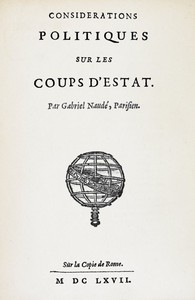
Considerations politiques sur les coups d'estat by Gabriel Naudé
Forget dry political theory. Gabriel Naudé's Considerations on Coups d'État is a startlingly direct guide to the mechanics of power. Written in 1639, it reads like a confidential briefing for a prince. Naudé, who worked at the highest levels of the French church and state, doesn't waste time debating ideals. He gets straight to the point: sometimes, a ruler must act outside the normal laws to preserve the state itself.
The Story
There's no traditional plot, but there is a compelling argument. Naudé examines historical examples of sudden, decisive political actions—from ancient Rome to the St. Bartholomew's Day Massacre in his own lifetime. He dissects them coldly, looking for patterns. What makes a coup successful? How should it be planned and executed? How does a leader justify breaking their own laws? The "story" is his journey through these case studies, building a framework for understanding extraordinary political violence not as chaos, but as a calculated tool.
Why You Should Read It
This book is a gut punch to naive ideas about how politics works. Naudé's bluntness is what makes it so gripping. He separates political survival from personal morality in a way that's both disturbing and enlightening. You won't agree with him, but you'll understand a darker side of statecraft. Reading it today, you'll see echoes of his logic in modern headlines—in justifications for emergency powers, sudden regime changes, and political "dirty tricks." It's a masterclass in realpolitik from a man who saw it up close.
Final Verdict
This is for the curious reader who loves history, politics, or psychology. It's perfect for anyone who enjoys Machiavelli's The Prince and wants to see that thinking applied to specific, explosive moments. It's not a cheerful read, but it's a profoundly insightful one. If you want to look behind the curtain of power and see the cold, hard gears turning, Naudé's manual—almost 400 years old—remains one of the most clear-eyed tours you'll ever get.
This book is widely considered to be in the public domain. Share knowledge freely with the world.


Ashley Harris
5 months agoCompatible with my e-reader, thanks.